The four-to-six class
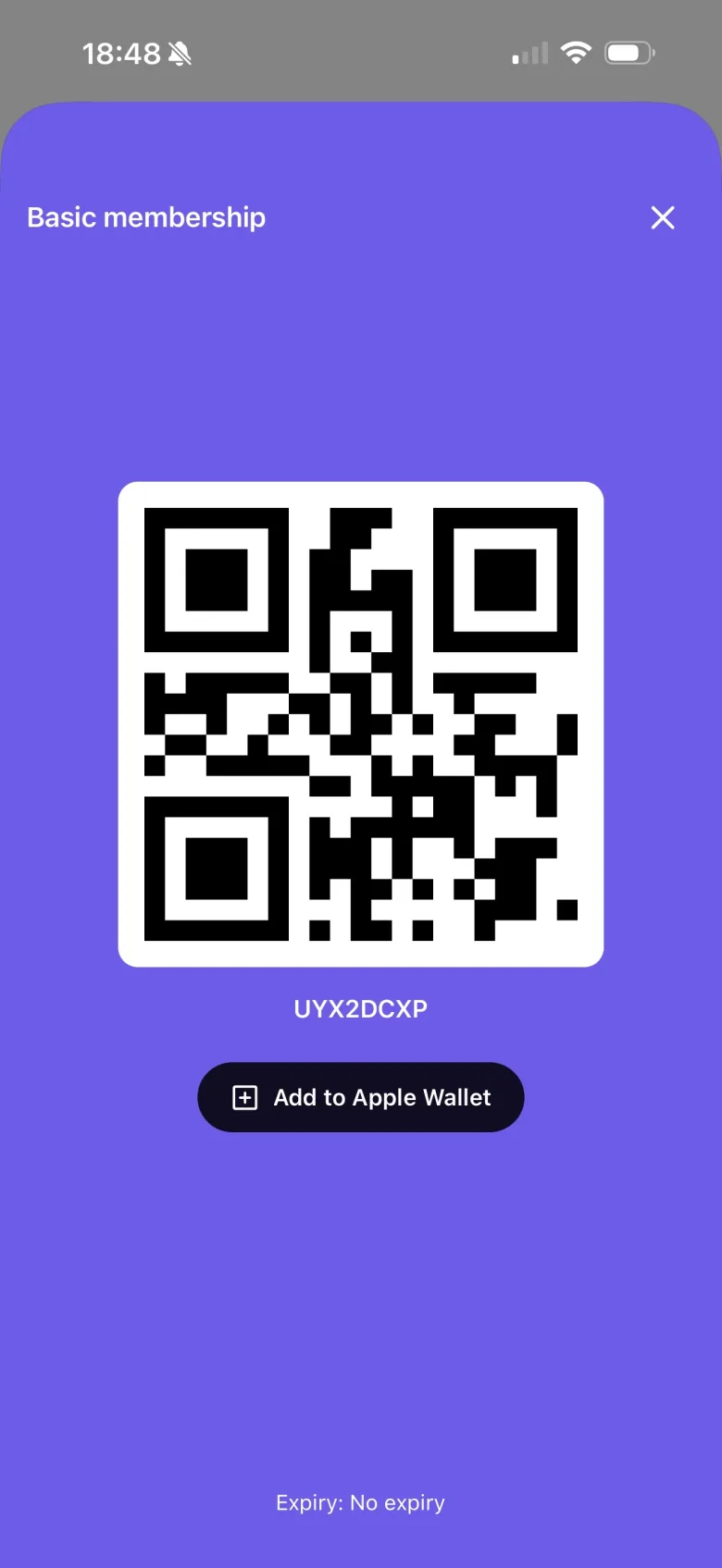
A membership just for the little ones, which only books their class. Parents book from their own login, and the child appears on the register by name with their emergency contacts and medical notes.
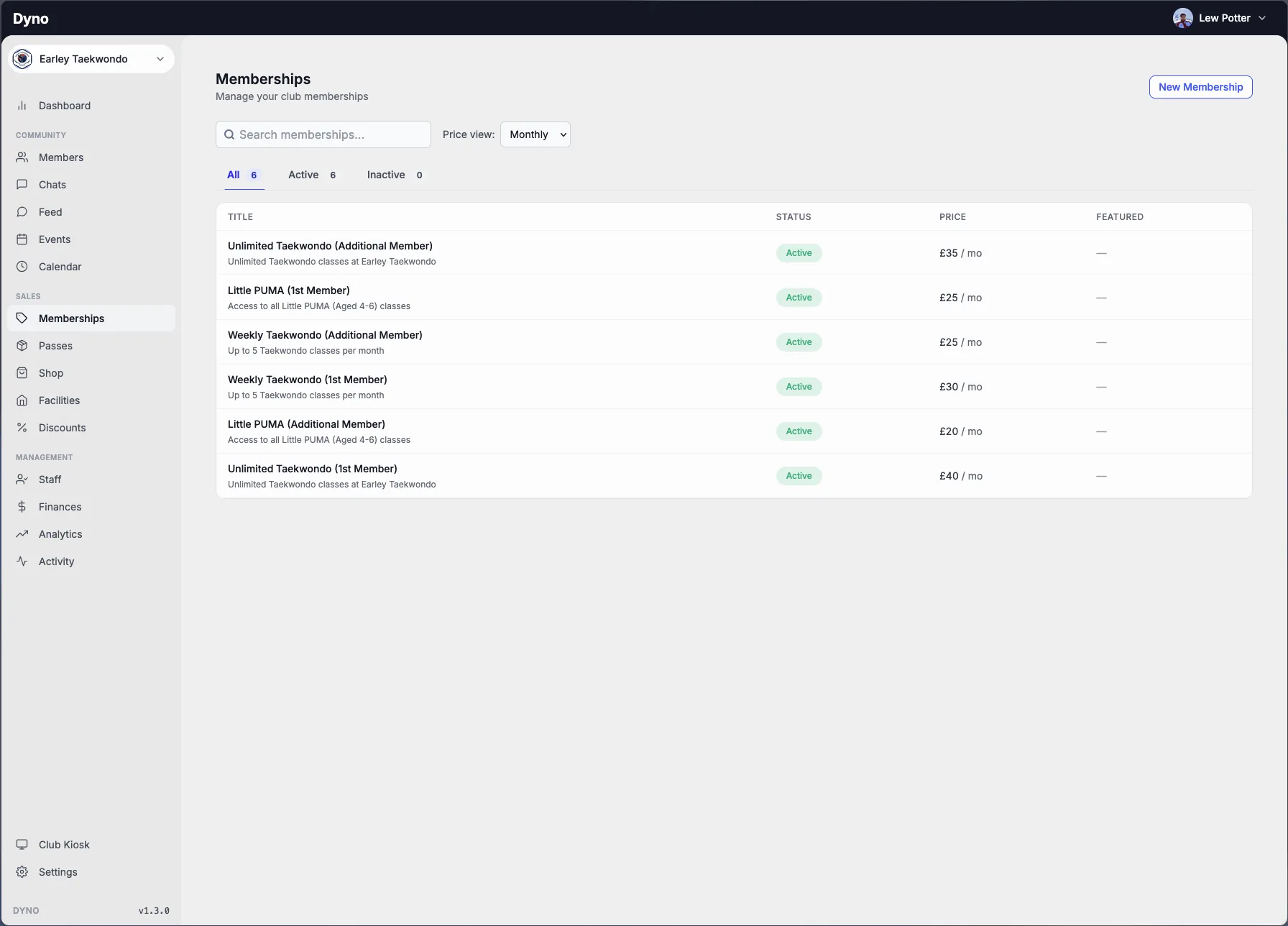
How family accounts workEach plan in a first-member and an additional-member version, renewing monthly by card or Direct Debit.

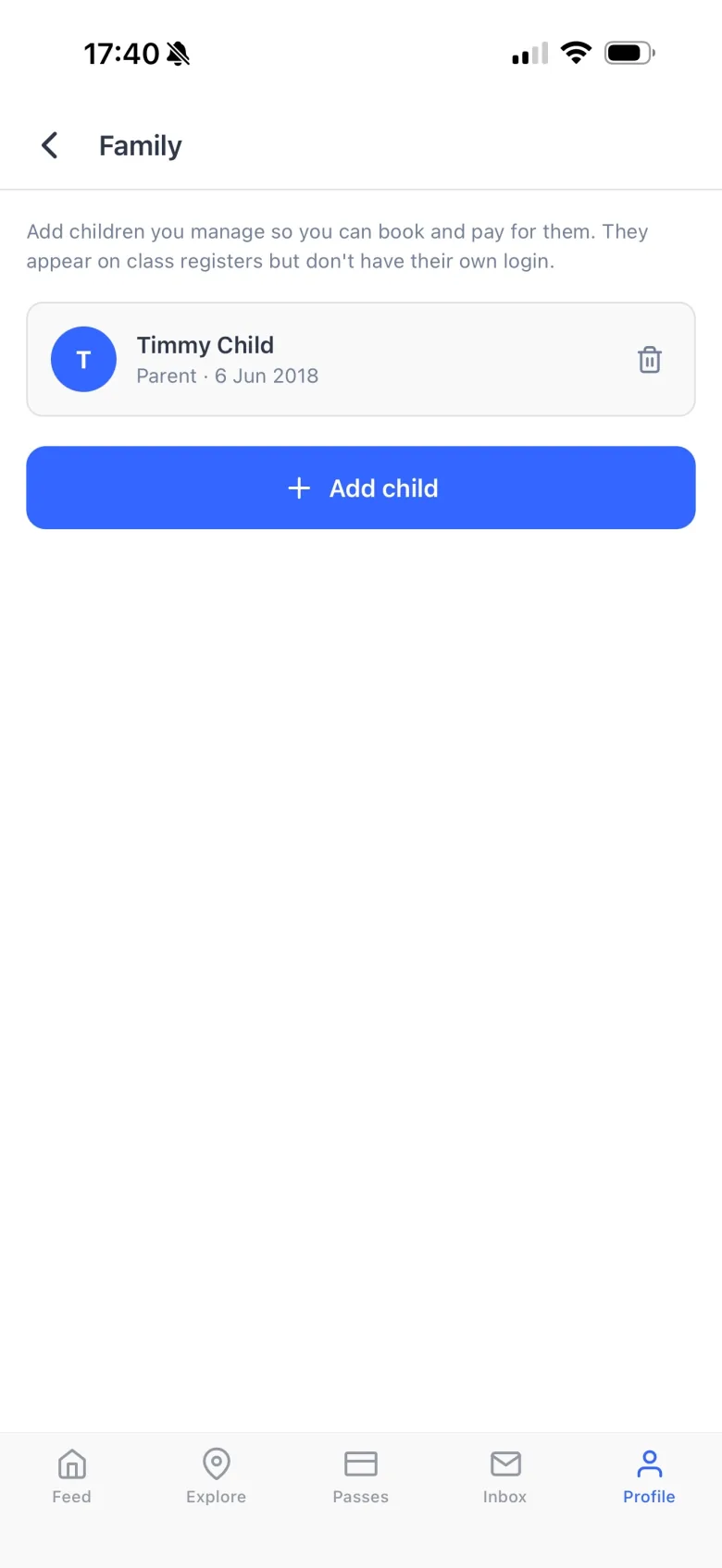
Parents add each child, book their classes and pay, and children never need an account of their own.


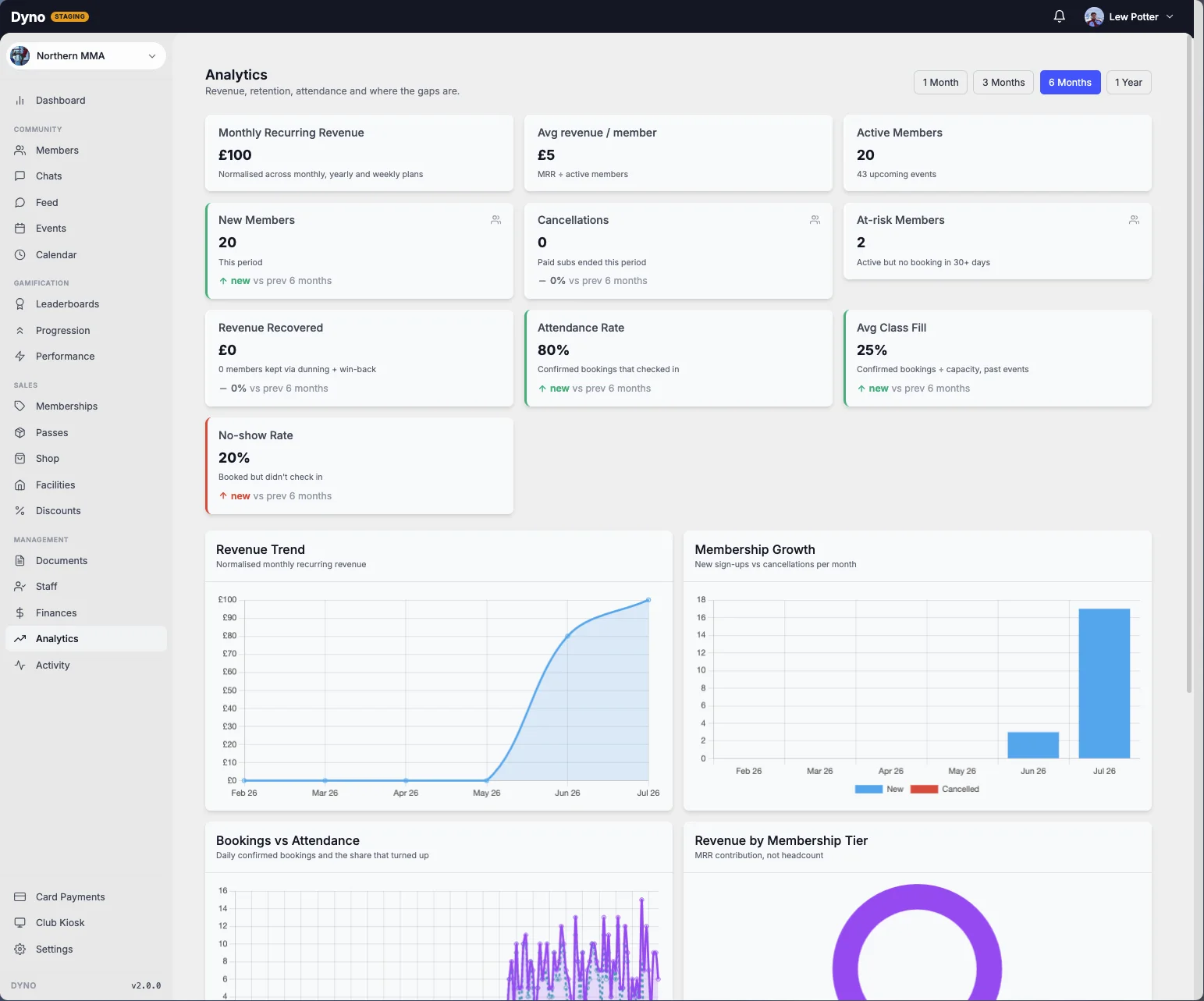
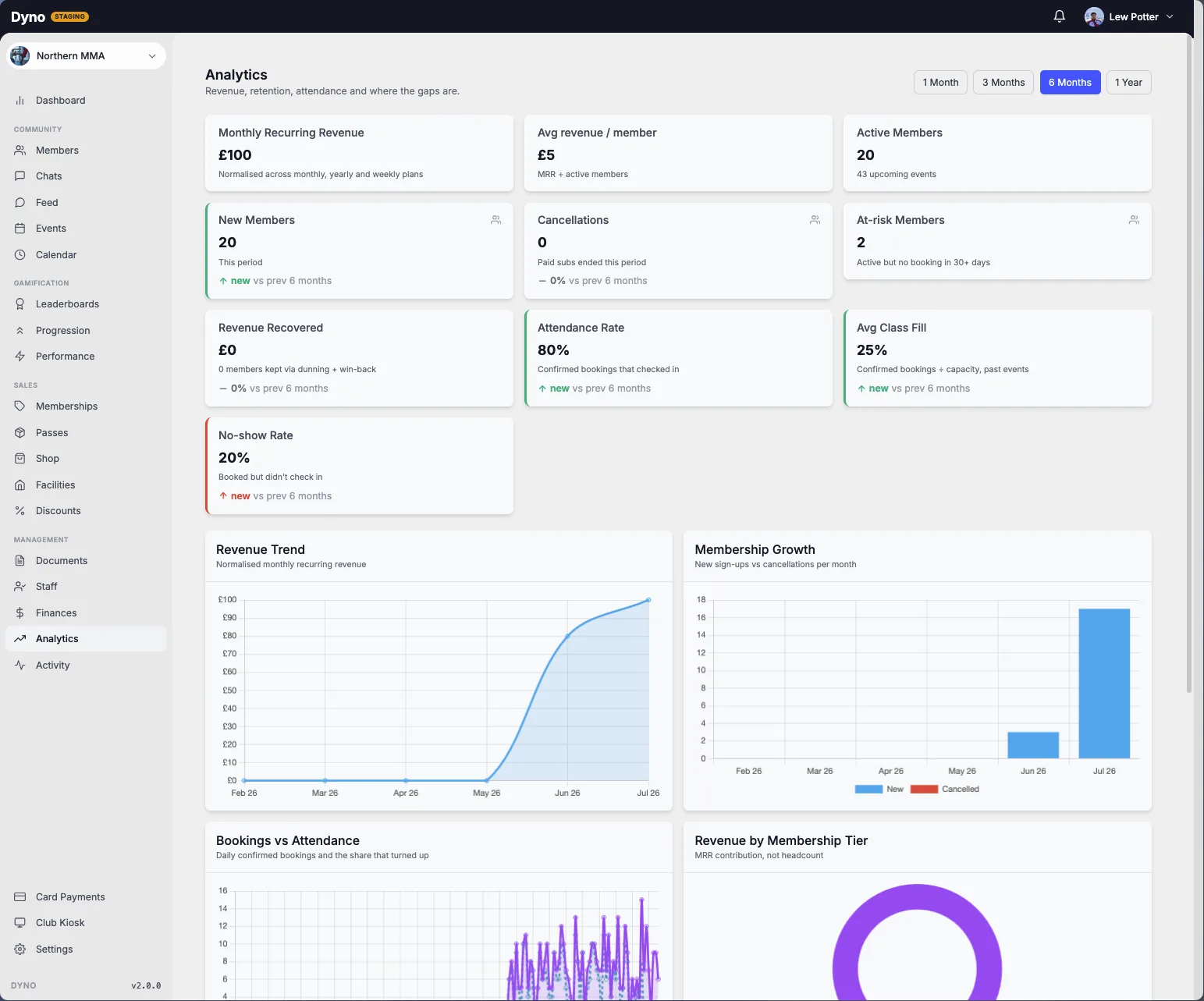
Attendance, new members, cancellations and members who are paying but have not booked in a month.

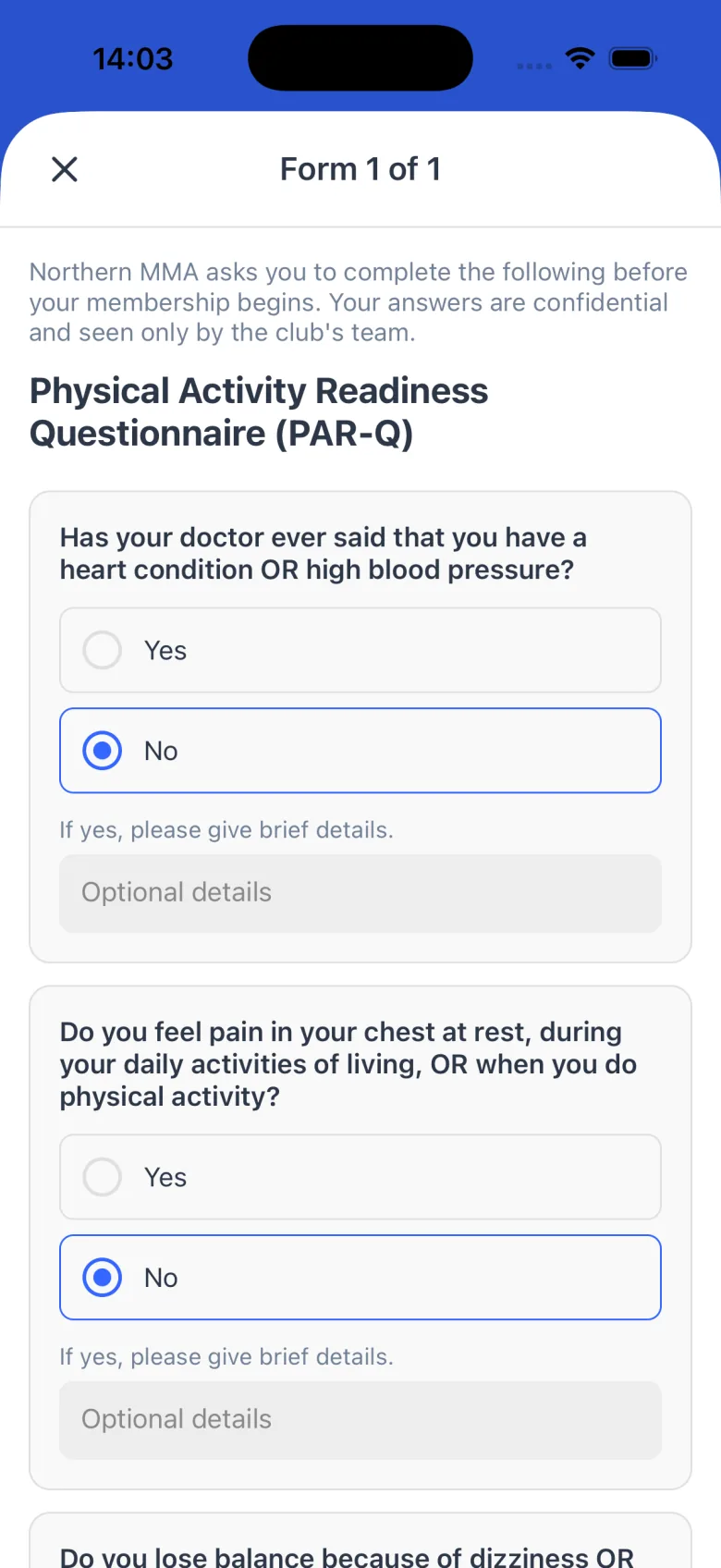
Make a PAR-Q and your waiver required on a membership, and nobody can buy it until both are complete.

You teach taekwondo because it changed you. Here is where the evenings go.
Fifteen four-to-six year olds learning to stand still in a line. Hard work, and the best advert the club has.
Patterns for the coloured belts, sparring for the squad, and three students due to grade.
A family of three on the second-member rate, one child moving up to unlimited, a licence that ran out last month and a grading fee paid in cash.
Kup grades in a spreadsheet, licence numbers in another and a bank app open on the side. None of it is taekwondo.
When the second-child price applies on its own, licences remind students before they lapse and the grading list comes from the syllabus, the kitchen table is free again.
Teach the patterns. Leave the admin to Dyno.
Memberships, payments, bookings and check-in, plus a member app and a club website carrying your name. Put your club in it and have a look around.
Riverside TaekwondoYour team runs the whole club from here: memberships, payments, bookings, check-in and the numbers behind them.
Grades, families, licences and fees in one dashboard, for clubs where most students are children.

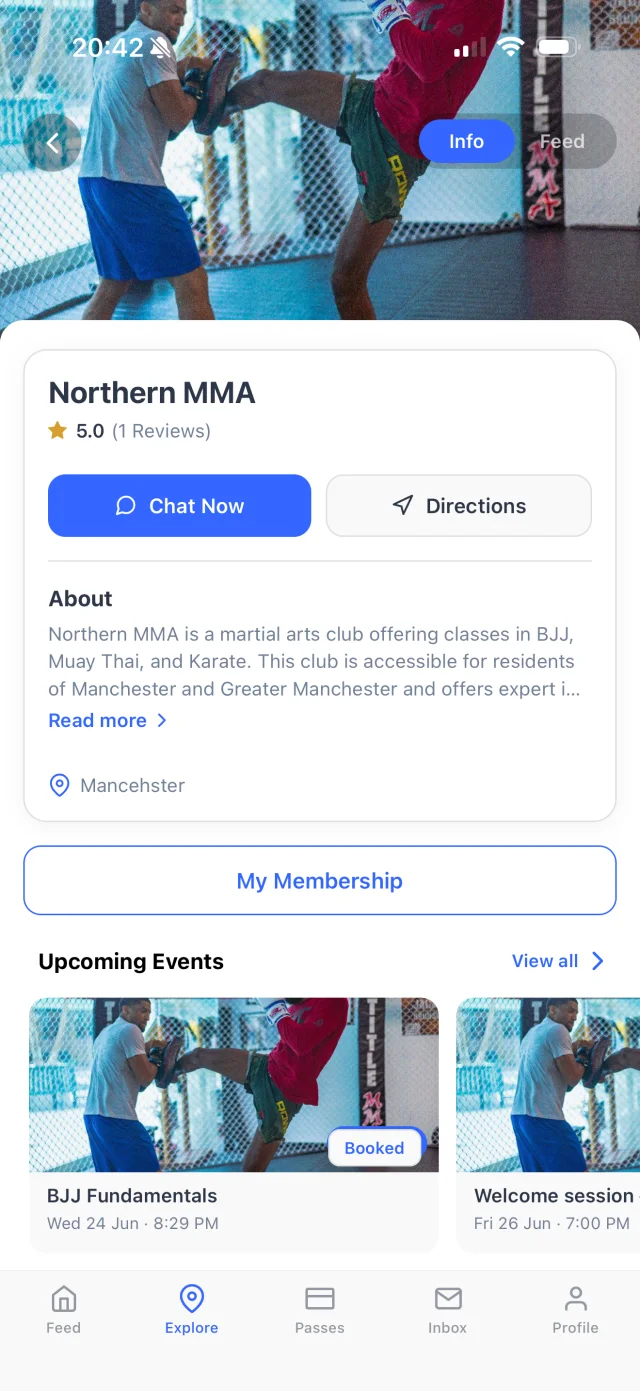
Most taekwondo members are children, so the app is built around the parent holding the account.


A class for the little ones, juniors straight after school, seniors and the sparring squad in the evening, and a grading every few months.
A membership just for the little ones, which only books their class. Parents book from their own login, and the child appears on the register by name with their emergency contacts and medical notes.
How family accounts workSet a family rule and the second child’s discount applies when a parent books a brother or sister in, without anyone working it out at the desk.
How memberships workInstructors tick off the patterns and techniques each student has shown. The roster shows every student’s current grade and who has covered the whole syllabus for the next one.
How grade progression worksThe grading is an event with a fee, paid when families book. Afterwards, promote everyone who passed from the roster in one go, and each student is congratulated in the app.
How events workEach student’s licence sits on their record with its expiry date, and Dyno sends a reminder 30 days before it runs out, so nobody turns up to a grading or competition without one.
How licences workMemberships renew by card or UK Direct Debit through Stripe into the club’s account. If a payment fails, the parent gets reminders to update their details and you see who is overdue.
How payments workJuniors and seniors three nights a week, tagged grades on the track, patterns for each grade and an annual licence for every student, with subs by Direct Debit.
Poomsae and sparring classes for different groups, a squad tier that books the extra sessions, poom grades for the under-15s and competitions as events.
A class for the little ones, juniors by age and adults in the evening, with a family rule so a family of four pays the right amount every month.
Run the whole club from one login. No bolt-ons, no juggling five tools, nothing to reconcile at the end of the month.
UK Direct Debit collected automatically, with failed payments retried for you. Cards, Apple Pay and Google Pay too, all landing in your club's own account, never ours.
Members, payments, bookings, check-in, your member app and club chat. All included, all talking to each other from day one.
No onboarding call and no setup fee. Most clubs take their first payment the same day they sign up.
Hear from the people running their clubs on Dyno.
Before Dyno we were juggling a Facebook group, a spreadsheet of subs and cash in hand payments that were impossible to track. Now the whole club lives in one place, monthly memberships collect themselves, parents book gradings straight from their phones, and I can message a full class in seconds. It has handed me back the couple of hours every week I used to lose to admin, so I can actually focus on teaching. For a club our size it has been a genuine game-changer.

0% platform fee on every plan. Your plan grows as your club does. No per-member pricing, no surprises.
Every new club starts with 30 days of Pro, free. No card needed.
Typically 20–100 members
Typically 100–300 members
Typically 300+ members
Add only what you need. All included on Pro, except bespoke website work.
Your teams' fixtures end to end. Put the fixture list up, ask who can play and chase whoever has not answered, pick a side from the yeses and tell the squad, then record the score and the appearances. For football, rugby, cricket, hockey, netball and any other club that plays somebody.
The daily workout, written once and sent to every member's app. Strength percentages worked out from each member's own lifts, a board that ranks RX above scaled, a movement library and benchmark history. For gyms, boxes and strength clubs. Included on Pro.
Your club website, built to your design. It starts from the standard site, then we make the changes you ask for in code: layout, extra sections and styling the template doesn't offer. The standard website is included from Growth up; this is the bespoke work, on any plan.
Bookable courts, rooms or pitches with eligibility rules, conflict checks and member self-booking. Available on Starter; included from Growth up.
Bookable coach calendars for 1:1 sessions, with weekly availability, session lengths and prices, and clash checks.
A home dashboard you arrange yourself: drag in the charts and trend cards you want, resize them and drop the rest.
Pinned placement in the Dyno discovery directory to help new members find your club first.
Searchable, exportable record of important actions across your club: sign-ups, cancellations, payments, staff changes. A basic activity log is included on every paid plan; this adds the advanced version.
Sell merch, drinks and one-off items from your club page, in the app and on the web, and at the front desk on a card reader.
Leaderboards, personal stats, attendance streaks and live milestone moments in the member app, all to drive attendance and engagement. Club polls come with it too.
Track times, distances, lifts and scores against the disciplines your club defines. Personal bests are detected automatically and shown to members in the app.
Win members back automatically: we-miss-you emails and push to at-risk members, expiring class-pack reminders and renewal nudges ahead of billing.
On the App Store and Google Play under your club's name, icon and colours. Add it to any plan.
Running a group of clubs or a federation? Ask about Enterprise
Annual Growth and Pro plans come with a 30-day money-back guarantee. Every member payment includes Dyno processing fees of 1.9% + 25p on cards, 1% + 20p capped at £4 on Direct Debit and 1% + 20p capped at £5 on a first payment made from the member’s bank, deducted from your takings and never added on top of your price. Commercial, business and non-UK cards cost more to process, so on those payments you pay what Stripe charges instead. Dyno takes 0% platform fee on every plan. Your club receives the rest, paid straight to your Stripe balance. See the pricing page for a worked example. VAT charged where applicable.
A taekwondo club is mostly families: children from four or five upwards, often brothers and sisters together, with a parent paying for all of them. Dyno is taekwondo management software built around that parent, with grades, gradings, licences and fees on each student’s record.
Coloured-belt grades are kup grades, counting down from 10th kup to 1st kup, and black belt grades are dan grades counting up from 1st dan. ITF and WT clubs differ beyond that. ITF clubs learn tul, patterns starting with Chon-Ji, and usually mark the grades between colours with a tag of the next colour. WT clubs learn poomsae, the Taegeuk patterns for coloured belts, and under Kukkiwon rules students under 15 are awarded poom grades rather than dan, which convert to dan later. Belt colours vary between associations on both sides.
Dyno doesn’t pick a system for you. Build a grade track in your order and colours, with tags as their own levels if you use them, a separate junior or poom track if you need one, and the patterns and techniques for each grade. Instructors tick off what students have shown, and the roster shows who is ready.
Sparring is contact and most students are children, so the joining paperwork matters. Make a PAR-Q and your waiver required on each membership, record photo consent for every child, and keep instructors’ DBS and first-aid records on the dashboard with reminders before they lapse.
In Great Britain, British Taekwondo is the governing body for WT taekwondo, while ITF and independent clubs belong to a range of associations. Most issue an annual licence that a student needs to grade or compete, often with insurance. Dyno tracks each licence from application to active, with a reminder 30 days before it runs out; registering with your association still happens on its own system.
Dig into the features behind it: grade progression, family accounts, licences, waivers and PAR-Q, safeguarding.
Teaching other arts too? See martial arts school software, karate clubs, BJJ gyms and boxing clubs.
Moving from another app? Read our martial arts software roundup or how switching works.

Most clubs set up in an evening and move families across over a few weeks, while the old system keeps collecting.
Add your kup grades in order with your colours and tags, then the dan grades, and poom grades if your juniors take them.
Unlimited, weekly and the little ones’ class, with additional-member versions or a family rule if you charge less for brothers and sisters.
Give each student the kup or dan grade they already hold, so their history begins there, and add their licence number and expiry.
Import the families from a spreadsheet, each child listed under the parent who pays. Parents already paying by GoCardless Direct Debit carry on without a new mandate, because the mandates move to Stripe.
30 days of Pro free, no card needed. Build your grades and memberships tonight and invite families when you are ready.